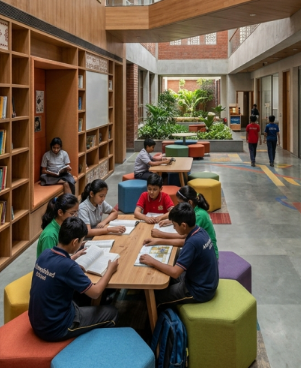
Learning environments are changing as schools, educators, and students look for ways to make education more engaging and practical. Education design focuses on how learning experiences, teaching methods, resources, spaces, and technology can be organized to support better learning outcomes. It goes beyond simply creating attractive classrooms or digital materials. The process considers how students interact with information, activities, teachers, classmates, and educational tools. By combining instructional planning with creativity and thoughtful problem solving, education design can help create learning experiences that are accessible, engaging, and suitable for different educational needs.
What Is Education Design?
Education design is the process of planning and developing learning experiences around specific educational goals. It can involve curriculum planning, lesson development, classroom environments, digital platforms, learning resources, assessment methods, and student activities.
The central idea is to think carefully about how learning happens. Instead of beginning with a particular textbook, application, or classroom arrangement, educators can begin by identifying what students should learn and then determine which methods and resources can support those objectives.
This approach can be applied in schools, colleges, universities, training programs, online courses, professional development, and other educational settings.
Why Learning Design Matters
A well-planned learning experience can make it easier for students to understand concepts and remain engaged with lessons. Educational design helps connect learning objectives with appropriate activities and assessments.
For example, if students need to develop problem-solving skills, a lesson may include practical challenges instead of relying entirely on lectures. If the goal is to improve communication, group discussions and presentations may become part of the learning experience.
This alignment between goals, activities, and assessment can create a more organized learning process.
Student Centered Learning
One important part of modern educational planning is considering the learner’s needs. Students have different backgrounds, interests, abilities, and levels of prior knowledge.
A student-centered approach recognizes these differences when lessons are developed. Activities can provide opportunities for learners to ask questions, explore ideas, practice skills, and receive feedback.
Student-centered learning does not mean removing the teacher’s role. Instead, teachers can guide students while creating opportunities for active participation.
Designing Effective Learning Experiences
A learning experience can include several connected stages. Students may first encounter a new concept, explore examples, practice a skill, complete an activity, receive feedback, and then reflect on what they learned.
The order and combination of these elements can influence how effectively students engage with the subject.
Education design encourages educators to consider the complete learning journey rather than treating each lesson as an isolated activity. This can help create greater continuity between individual lessons and broader course objectives.
The Role of Technology
Technology has become an important part of many learning environments. Digital classrooms, educational applications, interactive presentations, online courses, learning management systems, and virtual resources can expand the ways students access information.
However, technology works most effectively when it serves a clear learning purpose. Simply adding more digital tools does not automatically improve education.
Designers and educators can consider whether a particular technology helps students practice a skill, explore information, collaborate, receive feedback, or demonstrate knowledge.
This approach keeps technology connected to educational objectives.
Digital Learning Design
Online education requires careful planning because students may not share the same physical classroom. Digital courses need clear navigation, accessible resources, meaningful activities, and regular opportunities for interaction.
A well-designed online lesson might combine short instructional content with questions, exercises, discussions, and assessments. Students can progress through these elements while receiving feedback about their understanding.
Digital design can also consider mobile access, internet limitations, accessibility requirements, and different levels of technological experience.
Classroom Environment Design
The physical learning environment can influence how students participate. Classroom layout, seating arrangements, lighting, displays, technology, and access to learning materials can all contribute to the learning experience.
A classroom designed for group projects may require a different arrangement from one intended primarily for individual work.
Flexible spaces can allow educators to move between lectures, discussions, collaborative projects, and independent activities. The goal is to make the physical environment support the teaching strategy rather than restrict it.
Inclusive Education Design
Accessibility is an important consideration when developing learning experiences. Students may have different physical, sensory, cognitive, linguistic, or educational needs.
Inclusive design aims to reduce unnecessary barriers so that more students can participate. This may involve providing alternative formats, readable materials, captions, audio resources, clear instructions, flexible activities, or assistive technologies.
Considering accessibility from the beginning can be more effective than trying to modify a learning experience after difficulties arise.
Assessment Design
Assessment is another important part of educational planning. Tests are only one possible way to measure learning.
Depending on the objective, educators may use projects, presentations, written assignments, practical demonstrations, quizzes, portfolios, discussions, or other activities.
The assessment method should match what students are expected to learn. For example, a practical skill may be better evaluated through a demonstration than through a multiple-choice test.
Regular formative assessment can also provide feedback while students are still learning, allowing them to identify areas that need additional practice.
Encouraging Creativity and Critical Thinking
Learning experiences can be designed to move beyond memorization. Open-ended questions, case studies, design challenges, research tasks, and problem-solving activities can encourage students to examine information and develop their own responses.
Creativity can also be incorporated into academic subjects. Students might create presentations, models, experiments, digital projects, or written solutions based on the subject being studied.
These activities can help learners practice analyzing information, making decisions, explaining their reasoning, and considering different perspectives.
Collaboration and Communication
Many educational settings require students to work with others. Learning design can intentionally include activities that develop collaboration and communication.
Group projects can require students to divide responsibilities, exchange ideas, resolve disagreements, and present their conclusions.
Teachers can establish clear expectations for teamwork so that each student has an opportunity to contribute. Reflection after a group activity can also help learners recognize how communication affected the final result.
Teacher Roles in Education Design
Teachers are central to the success of learning design. They understand their students and can adjust activities according to classroom needs.
A teacher may begin with a learning objective, select appropriate resources, plan activities, monitor student progress, and modify instruction based on feedback.
Good design therefore remains flexible. If students struggle with a concept, an educator may introduce another explanation or additional practice. If students demonstrate strong understanding, the teacher can introduce a more challenging task.
Education Design and Career Preparation
Education is increasingly connected to skills used outside the classroom. Students may need communication, collaboration, research, digital literacy, problem solving, creativity, and adaptability in future academic and professional environments.
Learning experiences can incorporate these skills naturally. A research project can develop information literacy, while a team presentation can strengthen communication. A design challenge can encourage planning and problem solving.
Connecting academic knowledge with practical skills can help students recognize how learning can be applied beyond school.
Improving Learning Through Feedback
Feedback is a major part of effective learning. Students need information about what they are doing well and where improvement is needed.
Feedback can come from teachers, classmates, digital tools, self-assessment, or practical results. The most useful feedback is generally specific enough to guide the next step.
Education design can build feedback opportunities into activities rather than waiting until the end of a course. This creates a continuous cycle of learning, practice, feedback, and improvement.
The Future of Education Design
Educational environments are likely to continue evolving as technology, teaching practices, student expectations, and workforce needs change.
Artificial intelligence, interactive digital resources, virtual learning environments, adaptive learning systems, and new classroom approaches may create additional possibilities. At the same time, fundamental educational principles such as clear objectives, effective teaching, accessibility, meaningful practice, and useful feedback will remain important.
Future learning design will likely combine digital tools with human instruction rather than relying exclusively on either approach.
Frequently Asked Questions
What does education design mean?
Education design refers to the planning and development of learning experiences, including lessons, courses, activities, resources, assessments, and learning environments.
Why is education design important?
It helps connect learning objectives with teaching methods, activities, resources, and assessments so that students have a more organized and purposeful learning experience.
Does education design only apply to schools?
No. It can be used in schools, universities, online courses, professional training, corporate learning, workshops, and other educational settings.
How does technology affect education design?
Technology can provide additional ways to present information, support collaboration, deliver assessments, provide feedback, and create interactive learning experiences.
What is student-centered design?
Student-centered design considers learners’ needs, experiences, abilities, interests, and prior knowledge when developing educational activities and resources.
How does assessment fit into education design?
Assessment helps determine whether learning objectives have been achieved. Effective design aligns assessment methods with the knowledge and skills students are expected to develop.
Conclusion
Modern education requires more than delivering information. It involves creating learning experiences that help students participate, practice, communicate, solve problems, and apply knowledge. Education design provides a structured way to connect learning objectives with teaching strategies, technology, classroom environments, activities, and assessment. When these elements work together, educators can create learning experiences that respond to different student needs while encouraging curiosity and active participation. As education continues to evolve, thoughtful design can remain an important part of creating meaningful learning opportunities.
Pingback: Cypress College Early Childhood Education AS-T and What Students Should Know - Classroom Mindset