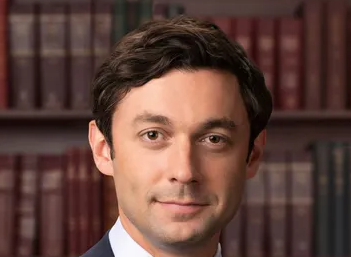
Jon Ossoff’s education provides an interesting look at how academic study can connect with public service, international affairs, journalism, and political work. Born in Atlanta, Georgia, Ossoff attended The Paideia School before continuing his studies at Georgetown University’s School of Foreign Service. He later earned a master’s degree from the London School of Economics. His academic background focused heavily on culture, politics, international affairs, and political economy, subjects that later became relevant to his professional career. His educational journey also included opportunities to study under notable academics and engage with questions involving diplomacy, human rights, and international policy.
Early Education at The Paideia School
Jon Ossoff attended The Paideia School in Atlanta and graduated in 2005. The school provided his early academic foundation before he moved into higher education. During his high school years, Ossoff also developed an early interest in public affairs. He interned in the office of U.S. Representative John Lewis, an experience that introduced him to congressional work and public service while he was still a student.
This early exposure was important because his later education followed subjects connected with international relations, politics, and public policy. Rather than studying these areas only from a theoretical perspective, Ossoff encountered government and civic work at an early stage.
Georgetown University and the School of Foreign Service
After high school, Ossoff attended Georgetown University in Washington, D.C. He graduated in 2009 from the university’s Walsh School of Foreign Service with a Bachelor of Science degree. His field was culture and politics. The U.S. Senate biography also records his 2009 graduation from Georgetown’s School of Foreign Service.
The School of Foreign Service gave Ossoff an academic environment centered on international affairs and diplomacy. Georgetown has described him as an undergraduate who was interested in diplomacy and initially planned to pursue a career in the Foreign Service. His studies later expanded into areas involving policy, human rights, and international affairs.
His Georgetown education also gave him exposure to experienced scholars and public figures. Georgetown notes that Ossoff took courses involving subjects such as human rights and international affairs. He later described the education he received at the School of Foreign Service as valuable to his work in investigative journalism and international issues.
What He Studied at Georgetown
Ossoff’s undergraduate degree was in culture and politics. This field brought together different areas of study rather than focusing on one narrow professional subject. Politics, society, culture, history, international affairs, and public policy can all intersect when students examine how governments and communities operate.
Georgetown’s School of Foreign Service was particularly relevant to Ossoff’s interests because he wanted to understand diplomacy and international affairs. His academic experience also exposed him to discussions surrounding human rights and global political questions.
This educational foundation later connected with his work investigating international subjects. Georgetown has noted that his undergraduate experience helped develop skills he subsequently used in journalistic work involving war crimes, organized crime, and corruption.
London School of Economics
After completing his undergraduate degree, Ossoff continued his education in the United Kingdom. He attended the London School of Economics and earned a Master of Science degree in international political economy in 2013. The U.S. Senate biography confirms the 2013 degree, while other biographical sources identify the subject as international political economy.
International political economy examines the relationship between politics and economic systems. Students in this area can study subjects such as international trade, government policy, global institutions, economic power, and relationships between countries.
For someone interested in diplomacy and international affairs, this field offered another way to examine how governments, businesses, institutions, and economies interact.
Why International Political Economy Matters
International political economy is useful for understanding issues that cross national boundaries. Economic decisions can influence foreign relations, while political developments can affect trade, investment, employment, and international cooperation.
Ossoff’s graduate studies therefore complemented his undergraduate education. Georgetown provided a foundation in culture and politics, while the London School of Economics gave him specialized graduate-level study in international political economy.
Together, these degrees created an academic background that connected political science, international affairs, economics, and policy analysis.
Education and His Early Career
Education was followed by practical experience in government and journalism. According to the U.S. Senate biography, Ossoff worked as a legislative assistant for Georgia Representative Hank Johnson, focusing on foreign affairs and defense policy, from 2007 to 2012.
His academic interests were therefore closely related to his early professional responsibilities. Foreign affairs, national security, and international politics were areas in which his educational background could be applied outside the classroom.
After completing his master’s degree, Ossoff moved into investigative journalism and documentary production. He became CEO of Insight TWI, where the company produced investigative documentaries involving international subjects. The work included investigations concerning corruption, organized crime, human trafficking, and war crimes.
The Connection Between Education and Journalism
Ossoff’s academic background can be viewed as part of the foundation for his investigative journalism career. His studies exposed him to international affairs and political economy, while his professional work required research, analysis, communication, and investigation.
Georgetown has specifically highlighted the connection between his education and his later journalism. Ossoff has said that his School of Foreign Service training was important to his work investigating complex international subjects and managing documentary productions in challenging environments.
This demonstrates how an academic degree does not always lead to a single traditional career. A background in international affairs can be applied to government, journalism, research, policy analysis, communications, and other fields.
Education and Public Service
Ossoff eventually entered electoral politics and was elected to the U.S. Senate from Georgia in January 2021. The Senate biography records that he took the oath of office on January 20, 2021.
His educational background is relevant to understanding the subjects that appeared throughout his early professional career. His undergraduate studies focused on culture and politics, while his graduate degree focused on international political economy. His early congressional work involved foreign affairs and defense policy, and his journalism career focused on international investigations.
These experiences show a consistent connection between education and several areas of his professional development.
Lessons From Jon Ossoff’s Academic Path
One notable aspect of Ossoff’s education is the combination of undergraduate and graduate study. His Georgetown degree established a broad foundation in culture and politics, while his London School of Economics degree provided more specialized study.
Students can take several lessons from this type of academic path. First, an undergraduate degree can provide a foundation that later supports specialized graduate study. Second, academic interests can evolve as students gain exposure to new subjects. Finally, education can be useful across several professional fields rather than being limited to one occupation.
Ossoff’s career illustrates how studies in politics and international affairs can connect with journalism, government, research, and public service.
Academic Interests Beyond the Classroom
University education also involves experiences outside formal coursework. Georgetown has described Ossoff as actively engaged in campus life and intellectual activities. He participated in The Chimes, an a cappella group, and developed connections with classmates and professors during his time at the university.
Such experiences can contribute to communication skills, collaboration, confidence, and personal development. For students studying politics or international affairs, activities involving discussion and teamwork can also complement classroom learning.
How His Education Shaped His Professional Foundation
It would be too simple to say that education alone determined Ossoff’s career. His professional experiences, mentors, interests, and opportunities also played important roles. However, his academic record shows a clear concentration on political and international subjects.
From The Paideia School to Georgetown University and then the London School of Economics, his education gradually moved from secondary education into specialized study of politics and international political economy. His later professional work repeatedly involved subjects connected to these areas.
The result was an academic foundation that could be applied in government, investigative journalism, international affairs, and eventually elected office.
Final Thoughts
Jon Ossoff’s educational journey includes high school at The Paideia School, undergraduate study at Georgetown University’s School of Foreign Service, and graduate study at the London School of Economics. His Georgetown degree focused on culture and politics, while his master’s degree concentrated on international political economy.
His academic background was followed by work in congressional government and investigative journalism before he entered electoral politics. The path demonstrates how education in politics and international affairs can provide a foundation for several different career directions. For students interested in public policy, diplomacy, journalism, economics, or government, his academic journey offers an example of how different areas of study can complement one another.
FAQs About Jon Ossoff Education
Where did Jon Ossoff go to high school?
Jon Ossoff attended The Paideia School in Atlanta and graduated in 2005.
What degree did Jon Ossoff earn from Georgetown?
He earned a Bachelor of Science degree from Georgetown University’s School of Foreign Service in 2009. His field was culture and politics.
What did Jon Ossoff study at the London School of Economics?
He earned a Master of Science degree in international political economy from the London School of Economics in 2013.
Did Jon Ossoff study international relations?
His academic background included substantial study of international affairs. At Georgetown’s School of Foreign Service, he studied culture and politics and developed an interest in diplomacy. He later specialized in international political economy at the London School of Economics.
Did Jon Ossoff’s education influence his career?
His education provided preparation relevant to his later work in government, investigative journalism, and public service. Georgetown has specifically described connections between his School of Foreign Service education and his later international investigative work.
When did Jon Ossoff graduate from Georgetown?
Ossoff graduated from Georgetown University’s School of Foreign Service in 2009.
When did Jon Ossoff complete his master’s degree?
He completed his master’s degree at the London School of Economics in 2013.
What subjects are associated with Jon Ossoff’s education?
His academic background is associated with culture, politics, diplomacy, international affairs, and international political economy. These subjects formed the educational foundation for several stages of his professional career.